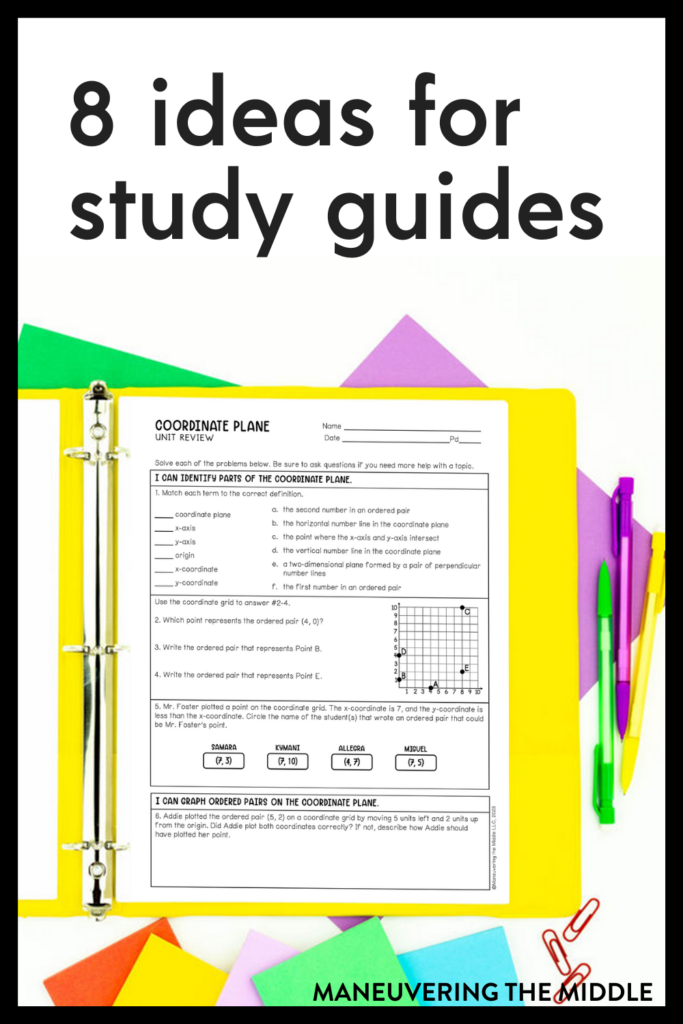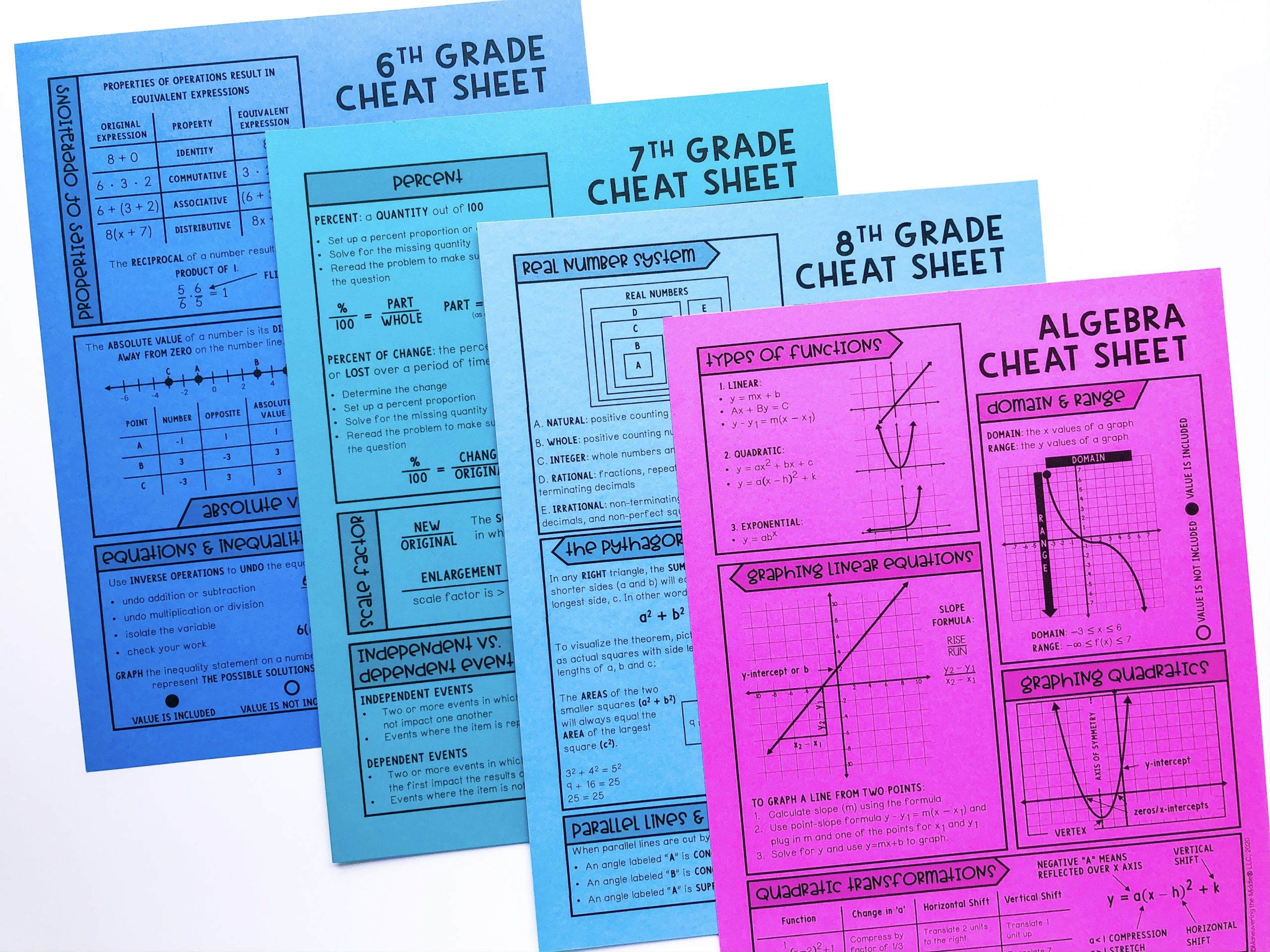
When preparing my students for an upcoming unit assessment, I consider it due diligence to spend at least one day reviewing the material from the unit. Our unit study guides make review days so much easier! Here’s why:
- The questions are broken down by skill (I Can Statement). I can easily see which skills will require a reteach or for me to go over in more detail. (See image below)
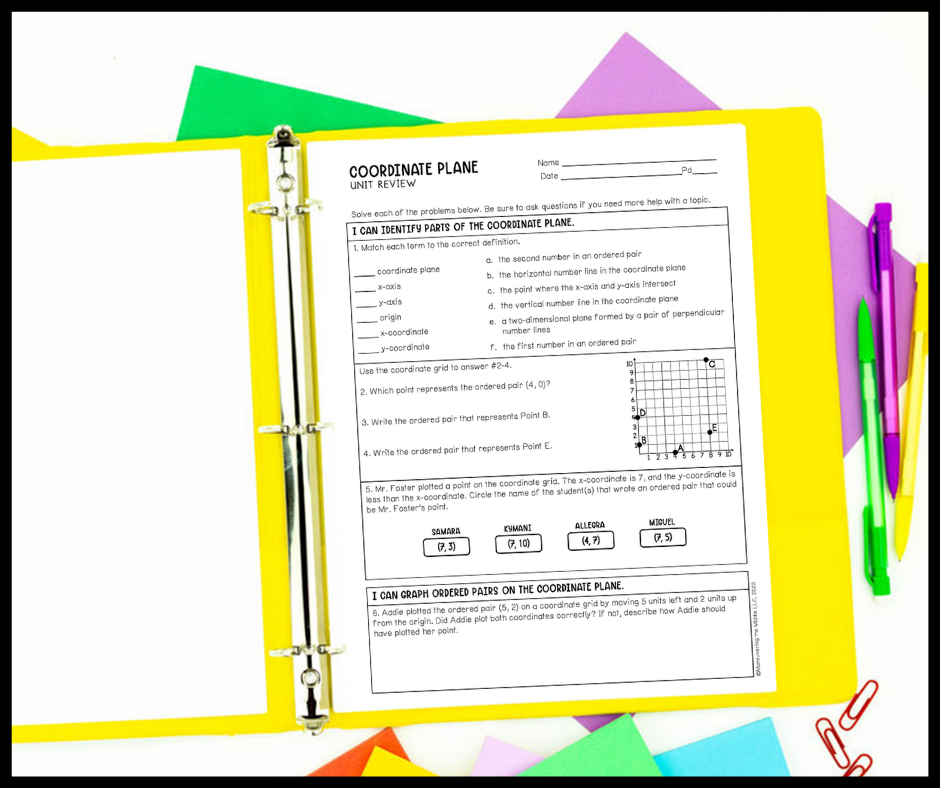
- The variety of question types include fluency, application, open-ended and multiple choice. My students are practicing how they will be assessed.
- The study guide is aligned from the unit materials to the unit assessment.
Marissa breaks down some of her best practices for using the study guide:
- Give all students a paper copy, in addition to a copy on Schoology
- Post the key with detailed work on Schoology so students can check their understanding
- E-mail my students’ parents a copy of the study guide and key, with a reminder about the upcoming test
- Try to give some class time to at least get it started
- Indicate in the online gradebook if they completed it so I can keep track and give feedback to parents.
- I do not count it as an official grade, I remind them that it will improve their test score, so there’s plenty of benefit to doing it.
Here are some (more) ideas from the teachers in our community (and a few from me as well):
Idea 1: Assign reviews as homework leading up to the test
“I assign reviews as homework and then we have a Q&A session the day before the test where they rate themselves on each ‘I can statement’ to self assess which areas they need to study more.” – Rachael
“I have students do certain sections for homework each night days prior to the test. I grade each section the next day and give it back.” – Mary
“I chunk it and start assigning parts of it before the first quiz as homework to review for the quiz and then the rest closer to the test.” – Rachel
Idea 2: Use a class day
“We play a whole class game and finish most of the review sheet. I play games where I pick the questions and move out of order on the sheet so we hit all the skills.” – Tara
“We do it in class. I give them time to do the problems on their own, then we go over them as a whole group. I give the answer first so they know to pay special attention to me working it out to see where they got off track. I ask questions to prompt students for the next step in the algorithm, so they’re still active and engaged in the process. We do this a section at a time. Sometimes I let them work with a partner/group and sometimes it’s individual.” – Kristy
Idea 3: Class Time/Homework Hybrid
“The week leading up to the test I assign 3-4 problems each day from the review during our warmup time. I go over them if students have questions. That way by the time they have to do it for homework they have about 1/3 of it done.” – Brandi
“I make a game out of the review. We do about half before they leave. The rest is homework.” -Elizabeth
Idea 4: Use the Review on the Test
“HS teacher, but review given one day, question over the review the next (also I allow notecards on tests so they use these two days to also build their notecards), and then test the next day.” – Cindy
“I have them do the review one day and test the next day. I let the students use their notes on the test because I feel that they are learning how to look up answers.” – Amie
Idea 5: Use the Study Guide all Unit Long
“I give the study guide on day 1 of the unit. When we finish a lesson I tell them ‘so now you know how to do this part of the study guide.’ Touch on it throughout the unit for warm ups or just practice or discussions” – Michaela
Idea 6: Use it as Extra Credit on the Test
“Any student that hands it in gets 5 points extra credit as long as the majority of the review is correct. If they miss a bunch of the review questions I do take off some extra credit points that they earn.” – Jenna
“I also give extra credit points on their test for every 5 problems they get right for a max of 5 points added to their test.” – Mary
Idea 7: Grade and/or give feedback on the study guide
“I create a Quizizz for each unit study guide so the students get immediate feedback and can use the redemption questions in Quizizz to try the questions they miss again.” – Nicole
“I answer questions the day before the test and they have access to the answer key to check their work. I take it as a completion grade along with their notes on test day.” – Brandi
“I put together a review and they get a whole class period to work on it and finish it at home. Next day I go over the questions/concepts most students missed (our online program grades it). Takes 20-30 min depending on if it’s my advanced or regular classes. The last 10-15 min students can ask individual questions. Test the next day.” -Martina
“They do a peer partner review with them as a test review, and I give them the answer sheet when they’re finished so they know if they were doing them correctly.” -Amanda
Idea 8: You do, We do, I do Approach
“I have long blocks but I have students work on it independently for 15 minutes. If they don’t know something or are confused I tell them to skip it. Then I give them 15 minutes to partner up and see what they can teach each other. Finally, they have 15 minutes to ask me and I show/explain problems to the whole class.” – Erica
Idea 9: Make it a Game
“Today I had my students choose their groups to complete the review and had them work together. I encourage them to use their notes to activate prior learning. We treated it as a “relay race” where they completed all the questions for a single “I can” statement and had me check them for accuracy. Only students who answered all correctly could continue to the next section. Prizes were awarded to the winning group.” – Samantha
The study guides are easy to turn into a game of tic-tac-tie, board race, connect 4, or 100s grid. These games require little to no-prep, and you can learn how to implement them in our blog post, Turn Any Worksheet into Easy Math Activities.
Are study guides classwork to you or homework? Do you grade them? How do you use our study guides?
WHAT IS MANEUVERING THE MIDDLE?
If you find this information helpful or what to use our study guides, consider checking out more of our resources! At Maneuvering the Middle, we design and develop standards-based math resources for grades 5 – Algebra 1. Our curriculum provides high quality, engaging resources for students and provides teachers with planning resources and plenty of training.
- All Access: standards-based, on-level curricula available for grades 5 – Algebra 1
- Maneuvering Math: a skill-based intervention program for middle school math students