Our classrooms are full of diverse students who learn math in a variety of ways. For some students, they excel when they can converse about math with a partner. For others, they need to see the concepts they are learning about. Lastly, there are students who need to physically move to engage in math.
As teachers, we can use and blend auditory, visual, and kinesthetic learning strategies into our classrooms to make math more accessible. Let’s talk about some practice ways to do this.
Learning Style 1: Auditory Learners
Like the name implies, auditory learners are going to excel by listening and talking about math. This is one of the easiest styles to incorporate into your teaching because you are probably already doing it.
- Turn and talks: give a variety of prompts (Read our Questioning Strategies Post here)
- Make them the teacher: ask students to teach a review skill to a classmate
- Storytelling: ask students to rephrase word problems using their own words
- Memorable songs/catchphrases: I can still sing the quadratic formula to “Pop goes the weasel” nearly 20 years later. Don’t have one for whatever skill you are teaching? Ask students to come up with one.
Learning Style 2: Visual Learners
Visual learners will do best when they can see how the math works. Visual learning exists in the first two steps of the CRA model, so again, effective teachers are probably already incorporating visual learning in their instruction.
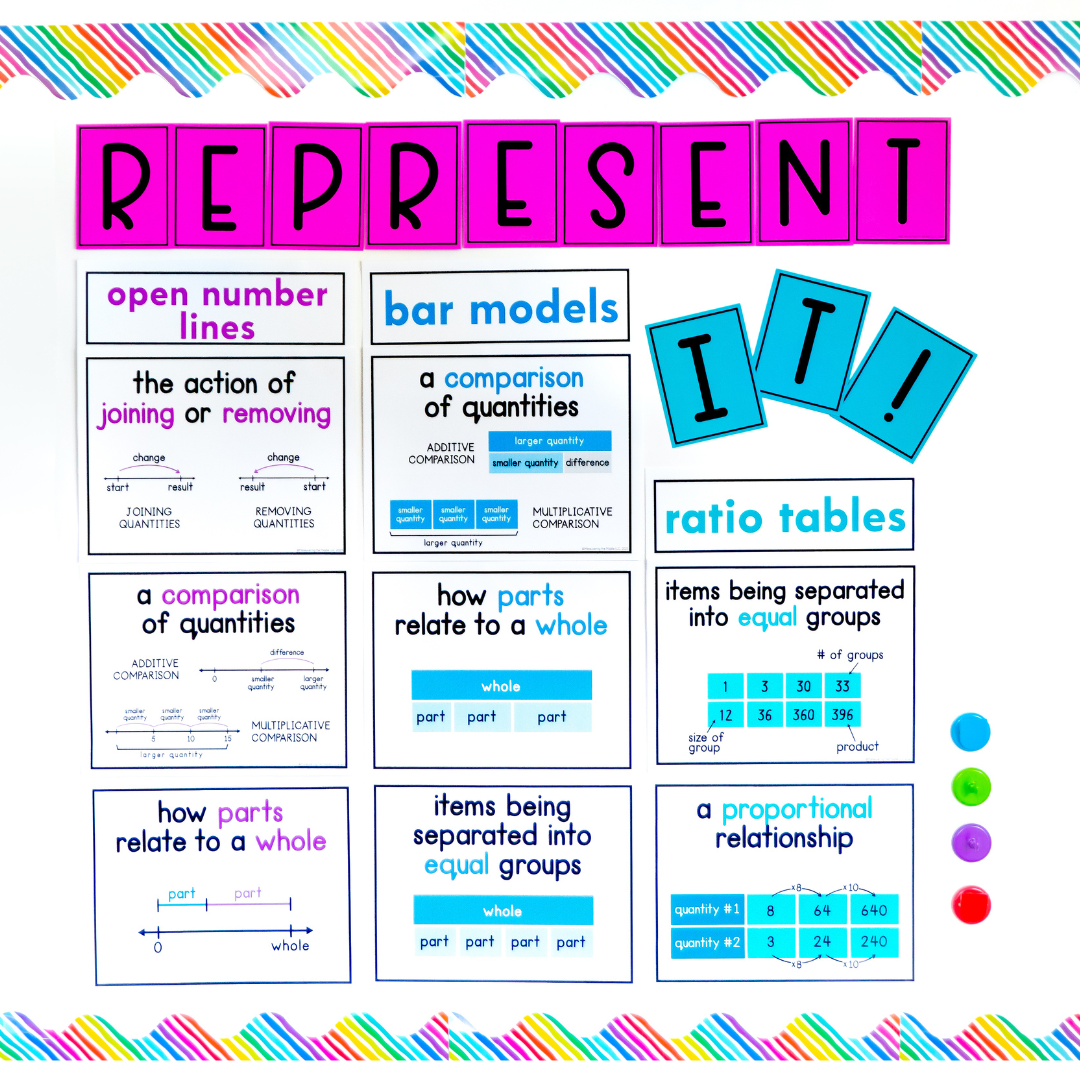
- Draw it out: number lines, shapes, graphs, tape diagrams. I can’t think of a single middle school math skill that can’t be visually explained.
- Color-code steps: highlight next steps in equations or order of operations
- Word walls and anchor charts: your walls can be doing the teaching for you (Get our Word Wall resource here)
- Desmos: interactive and free to use. This tool is perfect to show transformations.
Learning Style 3: Kinesthetic Learners
This is my personal favorite because I think students have the most fun on days that involve this hands-on approach. Movement is key here.
- Manipulatives: algebra tiles, nets, 3D shapes (read about our favorite manipulatives here)
- Activities that are tactile: cut and pastes, mazes, solve and colors (all activities that we include in our All Access membership)
- Stations and scavenger hunts: students rotate through a variety of problems by physically moving through the classroom
- Movement connecting to math: using your arms to show positive, negative, undefined, zero slope
- Whiteboard work: Don’t sleep on a whiteboard. Building Thinking Classrooms really makes a case for students working on their feet for more physical engagement.
The best types of lessons include a blend of all three learning styles. By using auditory, visual, and kinesthetic, students are given more opportunities to understand math concepts. How do you include all of these learning styles in your classroom?
WHAT IS MANEUVERING THE MIDDLE?
If you find this information helpful, consider checking out more of our resources! At Maneuvering the Middle, we design and develop standards-based math resources for grades 5 – Algebra 1. Our curriculum provides high quality, engaging resources for students and provides teachers with planning resources and plenty of training.
- All Access: standards-based, on-level curricula available for grades 5 – Algebra 1
- Maneuvering Math: a skill-based intervention program for middle school math students